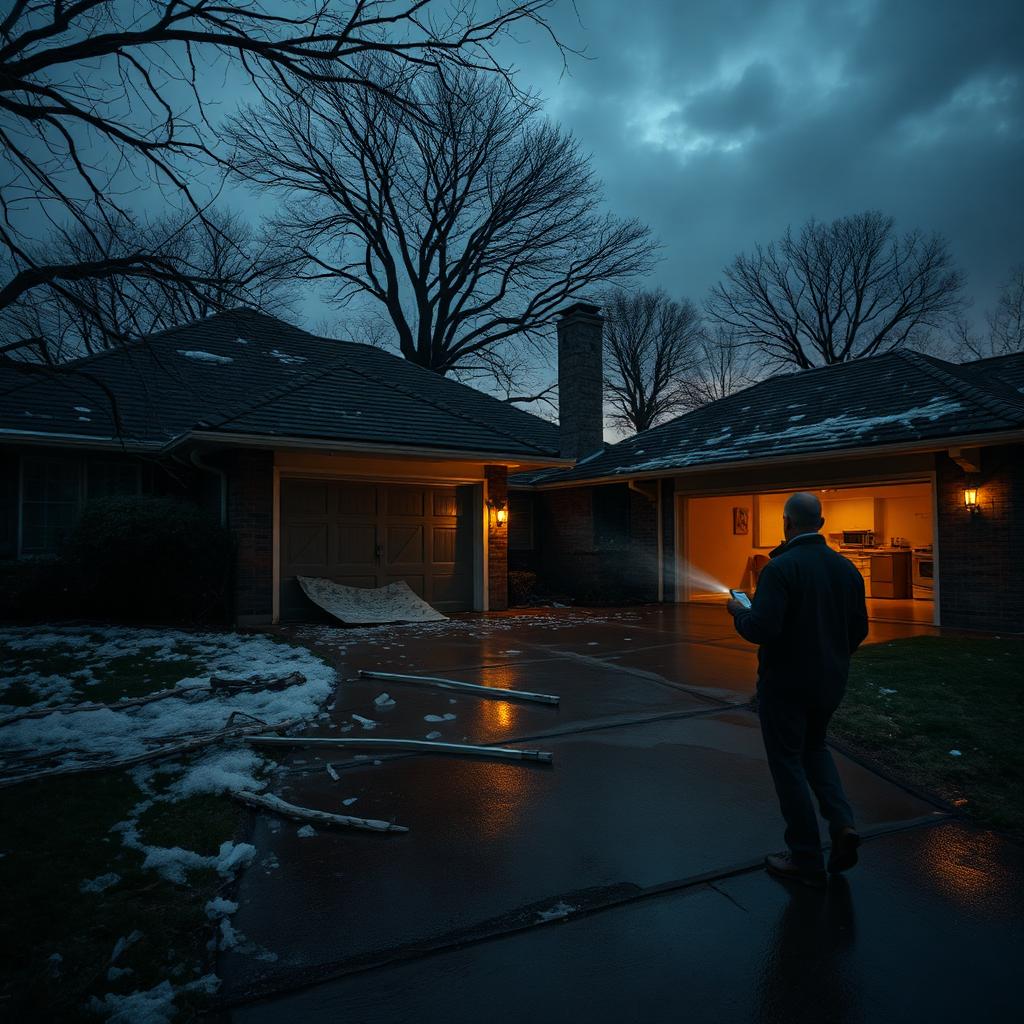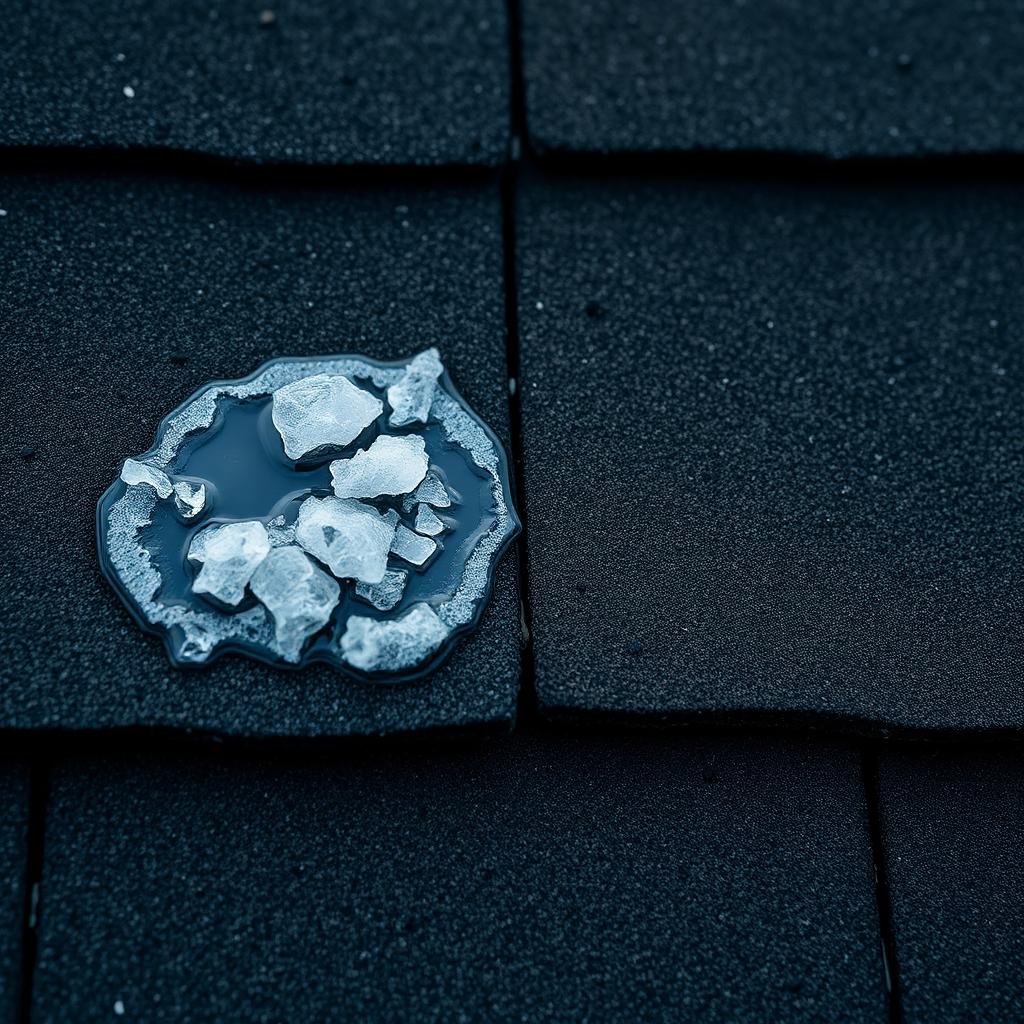
A round dark spot on a shingle could be a $14,000 roof replacement or a cosmetic defect your carrier will refuse to touch. Telling them apart is the entire game. Here are the five tells we look for on every Texas inspection.
The five tells
1. Granule pattern
Hail strikes knock granules off in a sharp-edged crater that exposes the asphalt mat below. Blisters pop and leave a softer crater with the mat intact and granules around the rim still attached.
2. Bruise vs. depression
Press your thumb on the spot. A hail bruise feels soft — the fiberglass mat is fractured. A blister is rigid; the mat is intact under a bubble that ruptured.
3. Directional pattern
Hail falls with wind direction. On a north-facing slope after a NNW storm, every strike will be on the same side of every shingle tab. Blisters are random — driven by sun exposure and underlayment moisture, not wind.
4. Soft metals
Hail dents your AC condenser fins, gutter aprons, vent caps, and the sides of the chimney chase. Blisters don't. If the soft metals are pristine and your shingles 'look hailed,' you're looking at blisters.
5. Age and color
Blistering is overwhelmingly a problem on dark shingles in their first 2-4 years. Hail damage occurs on any roof of any age the moment a storm passes.