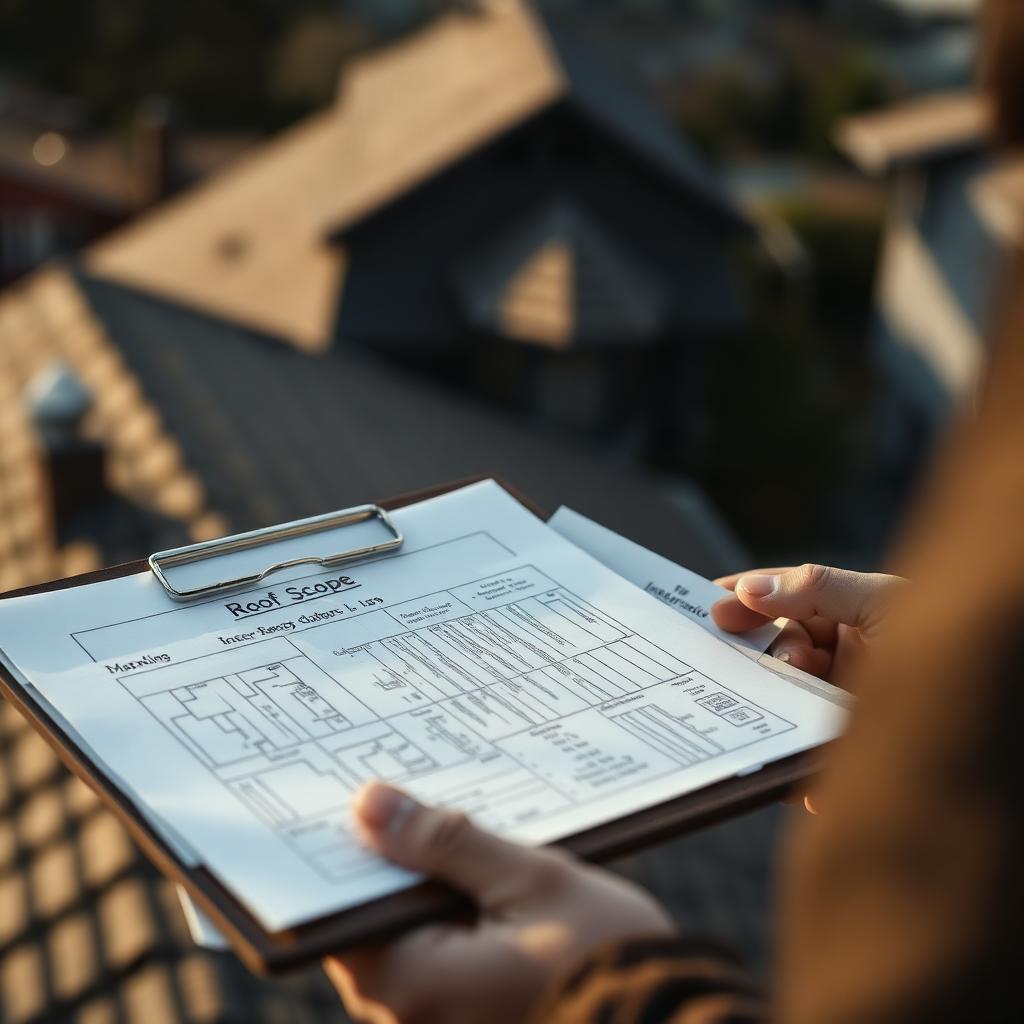
Most homeowners see the adjuster's scope for the first time after the carrier has already decided what to pay. That is the wrong moment to learn what RCV, ACV, O&P, and 'test square' actually mean. This is a field guide to reading the document line by line — and the four places we routinely catch carriers underpaying DFW claims.
The anatomy of a scope
An adjuster's scope is an itemized estimate built in Xactimate or Symbility. It lists every roof component, the quantity, a unit price, and a depreciation figure. Everything else in your claim — the check, the supplements, the recoverable depreciation — flows from this document.
- Line items: shingles, felt, drip edge, ridge cap, ice & water shield, flashings.
- RCV (Replacement Cost Value): what it costs to replace, today.
- ACV (Actual Cash Value): RCV minus depreciation. This is your first check.
- Recoverable depreciation: the rest, released after the work is verified complete.
- O&P: Overhead and profit, typically 10% + 10%, owed on jobs requiring 3+ trades.
The four places carriers underpay
1. Code upgrades omitted
Texas IRC requires synthetic underlayment, drip edge on all eaves and rakes, and ice & water shield in valleys. If the original roof predated current code, the scope must include 'Law & Ordinance' coverage. Carriers routinely leave it off.
2. Detached structures missing
Detached garages, sheds, pergolas, and gazebos are a separate dwelling under Coverage B. If hail hit your main roof, it hit the shed. We've added $4,800 in average supplements just by walking detached structures.
3. Ridge cap quantity short
Adjusters measure ridges from satellite imagery. On complex roofs with multiple hips and ridges, the satellite math is usually 15–20% light. We re-measure with a wheel and submit a supplement.
4. O&P denied on qualifying jobs
If your job requires three or more trades (roofing, gutters, framing, paint, electrical for satellite re-attach, HVAC for vent re-flashing), O&P is owed. Carriers deny it by default. We document the trade count in writing.
When supplements get denied
A denial is not the end. Texas allows 'invoking appraisal' — a binding third-party process where each side picks an appraiser, the appraisers pick an umpire, and the panel rules. We've never lost an appraisal on a documented hail claim. If your carrier is stonewalling, this is the lever.