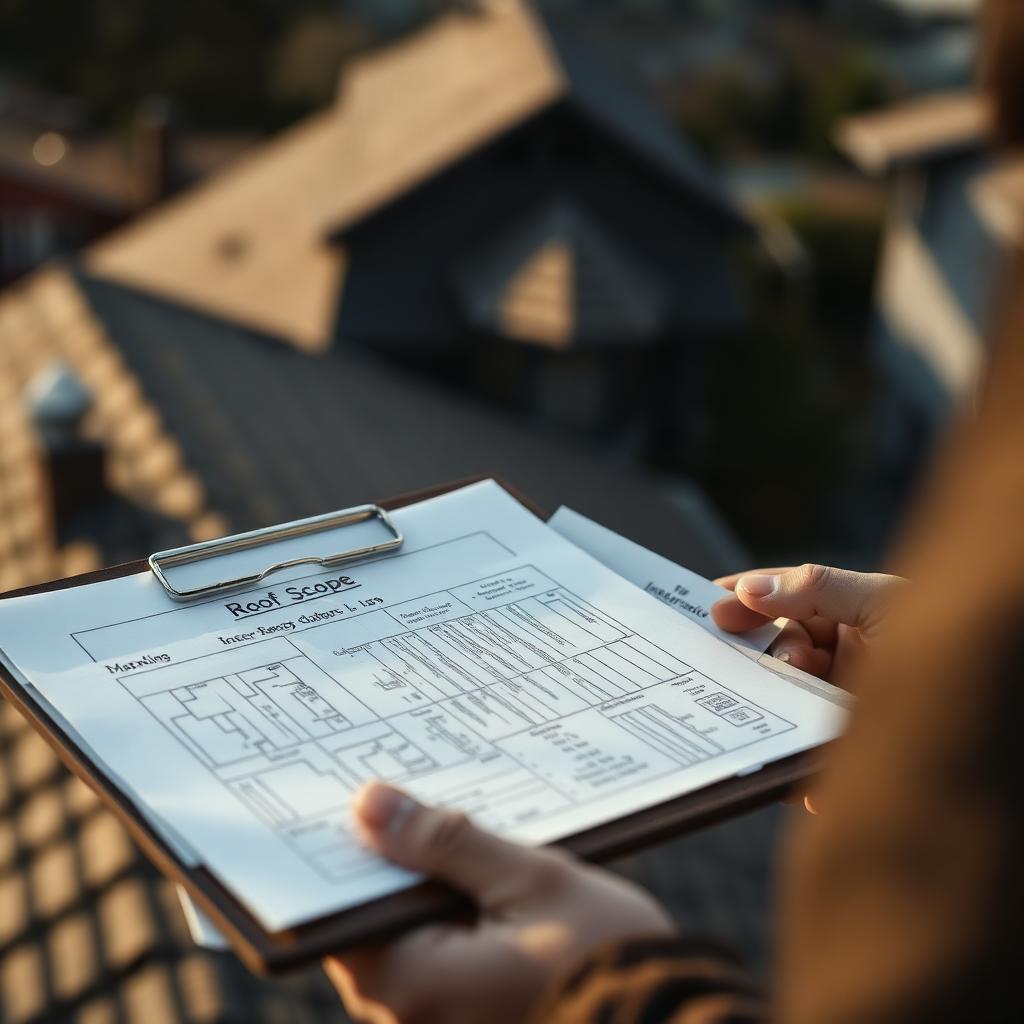
Carriers train their field adjusters to write the smallest scope the policy will support. That isn't malice — it's the job. Your counter is to walk the roof with them, with a roofer present, and make sure every item that qualifies for coverage actually makes it into the report. Here's how we prep clients for that meeting.
The 48 hours before
- Pull your declarations page and confirm coverage type (RCV vs ACV), deductible, and any wind/hail rider.
- Photograph every elevation of the home — siding, windows, gutters, fence, A/C, mailbox, outbuildings.
- Save your NOAA storm report PDF for the date of loss; print two copies.
- Schedule the roofer's on-roof presence for the same 60-minute window as the adjuster.
- Make a list of every interior leak or water stain with the room name and date first noticed.
What to say on-site
Keep it factual and short. 'The storm was the night of [date]. I noticed [specific damage] the next morning. My roofer found [hits per test square] on the [direction]-facing slope and damage on [list of soft metals].' Avoid speculation, avoid emotion, avoid value statements like 'I think the whole roof needs to go.' Let the evidence make that case.
What to never say
- 'The roof is pretty old anyway' — invites a depreciation conversation you don't want.
- 'My neighbor got a full replacement' — irrelevant and signals adversarial framing.
- 'My contractor said this should be totaled' — adjusters distrust contractor pre-conclusions; let the data say it.
- 'I'll just take whatever you offer' — they will note that and write the minimum scope.
What to ask for in writing
- A copy of the field notes and photos before they leave the property.
- The estimated turnaround for the scope and ACV check.
- The carrier's supplement process — every carrier has one; ask how to invoke it.